The entry identifies an alleged refusal to submit to a chemical test. It also lists his inmate type as PCSO.
The information does not include the date of the alleged incident.
Second-Degree DWI Allegation
The listed charge cites Minnesota Statute 169A.25, subdivision 1(b).
Under that law, second-degree DWI can involve refusing a required chemical test when one aggravating factor is present.
Minnesota classifies this offense as a gross misdemeanor.
The listing does not identify which aggravating factor authorities allege in Longtin’s case.
Minnesota law recognizes several possible aggravating factors in impaired-driving cases.
They include certain prior impaired-driving incidents and specific circumstances involving alcohol levels or a child passenger.
Those examples explain the statute and do not establish facts about Longtin’s allegation.
Readers can review the applicable law through the Minnesota Office of the Revisor of Statutes.
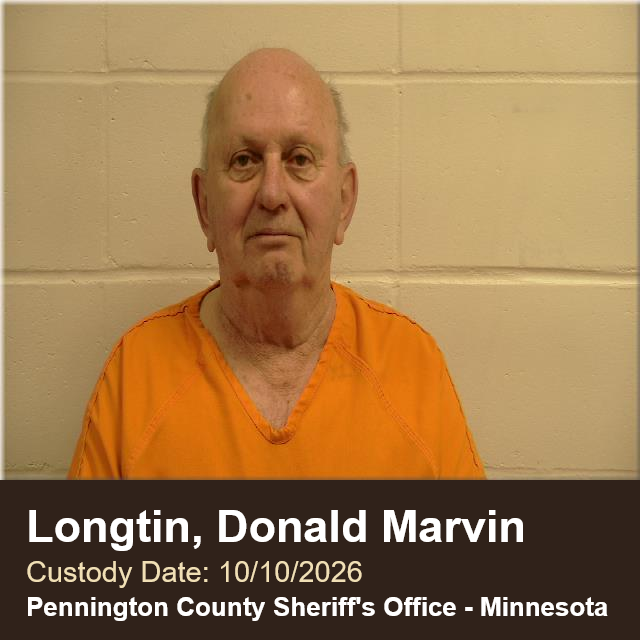
Details of the Alleged Incident Remain Limited
The supplied booking details do not identify where the alleged driving incident took place.
They also do not name an arresting agency beyond the PCSO inmate designation.
No test results, police narrative, or court complaint were included with the entry.
Those gaps leave the circumstances surrounding the allegation unclear.
The entry does not list a court appearance or any plea.
It also does not show whether Longtin was released after the record was created.
Jail rosters can change as people enter custody or leave custody.
A listing should not be treated as proof of someone’s current custody status.
Where to Check Official Records
The Pennington County Sheriff’s Office provides a public in-custody search.
That service can help readers review available jail information.
Residents can visit the Pennington County Jail inmate roster for custody updates.
The Minnesota Judicial Branch also provides an online search for certain public court records.
Any available court filing may offer further details about the allegation.
Readers can use Minnesota Court Records Online to search for public case information.
Legal Process and Presumption of Innocence
Second-degree DWI cases are handled through the criminal court process.
The precise charge and available evidence determine what questions a court must consider.
Penalties cannot be assumed from a jail entry alone.
The information provided does not establish a sentence or conviction.
A listed charge reflects an accusation, not a finding of guilt.
Longtin is presumed innocent unless proven guilty in court.
Additional details should be confirmed through official records before being reported as fact.
I’m Adrian Cole reporting for TRF News.
Copyright 2026 TRF News. All rights reserved.